
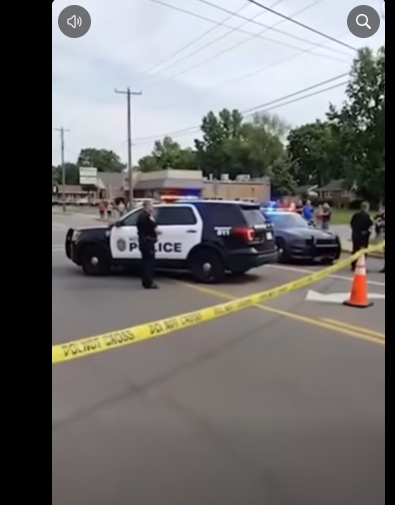
Sirens ripped the sky open. In seconds, a quiet neighborhood became a sealed-off maze of flashing blue and red. Parents froze at windows. Children whispered questions no one could answer. The streets emptied, but fear didn’t. Police spoke of “precaution,” yet their rifles told a harsher story. Every unanswered alert, every blocked road, pushed anxiety high… Continues…
No one forgot how quickly normal vanished. One moment, people were planning dinner, homework, and late shifts; the next, they were staring at a wall of uniforms and tape, wondering what invisible line had just been crossed. The absence of clear information became its own kind of threat, forcing everyone to fill the silence with worst-case scenarios.
Yet as the night wore on, something quieter emerged beneath the fear: a fragile sense of shared vulnerability. Neighbors checked on each other, porch lights stayed on a little longer, and strangers traded updates like lifelines. When the cordons finally eased and engines faded into the distance, the relief felt real—but so did the realization that safety is never as simple as sirens arriving or leaving. What stayed behind was a lingering question: how do you go back to ordinary once you’ve seen how quickly it can be taken away?